I’ve wanted to try vibe coding something for a long time, but I never had an idea that excited me enough to dive in.
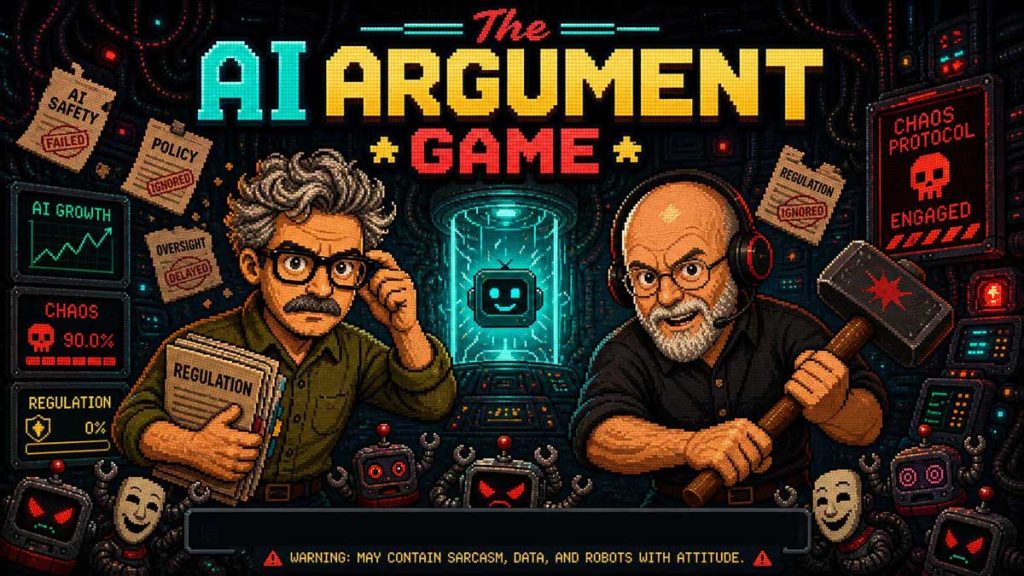
Until I thought about turning The AI Argument podcast into a retro-style arcade game.
This seemed like the perfect project to dip my toes into vibe coding; relatively simple, low risk, and self-contained. GPT-5.5 had just launched and I was hearing great things about the latest iterations of Codex, so I figured it was a good time to experiment.
I want to tell you about the experience, and encourage you to explore vibe coding… but first, I want to address something. Because I frequently see these posts and videos where some dude is like “you have to try vibe coding, anyone can do it…” and then they proceed to do some incredibly technical wizardry that you clearly need special skills to achieve.
So let’s talk about that for a sec. I’m not a developer, but it’s true that I’ve managed web app and web development projects and have generally been *around* developers – but that’s going back some time.
I also spent a long time as a web designer, so at one point I had very basic PHP and JS. Like… super basic.
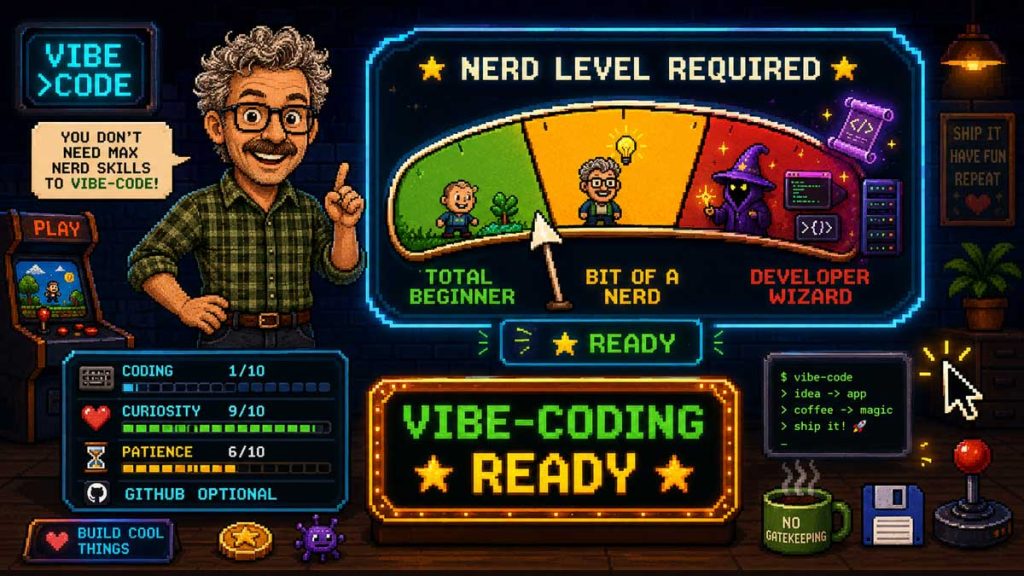
So I wouldn’t know where to start coding a browser-based game. But at the same time, compared to the average joe on the street, I probably do have some skills that might be applicable. I am a bit of a nerd.
But those nerdy skills never really came into play. Which means that I do genuinely believe that literally anyone can do this.
You might need to tinker about a little bit, figure out the interface of Codex, ask ChatGPT for help setting it up. If you want to get really nerdy about it it’s worth setting up a Github account.
So if you’re brand new to all this, it’s worth putting some time aside to get comfortable, but it’s all genuinely do-able by anyone.
Just do what I did and keep your experiment simple.
So if you’re already building your own apps with Claude Code or Codex this post isn’t for you. This is for you if, like me, you’ve been vaguely wondering if you should try vibe coding.
The answer is: you should.
Truly amazing what’s achievable – just try it
I waited way too long because I didn’t have a “good” idea. Even if you never vibe-code anything else in your life, it’s worth devoting a weekend to trying something simple if for no other reason than to understand the world we live in now.
A world where you can come up with an idea, and ask the machine to build it for you. It’s incredible to be able to create something fairly polished with next to no skills. I’m now living in the sci-fi movies I grew up watching, and that’s worth experiencing in full.
Look, you never know where your first vibe coding experience might lead, maybe at first you build something silly just for fun, and then you end up having an amazing idea for something useful.
But just building something for the sake of the experience is valuable in itself.
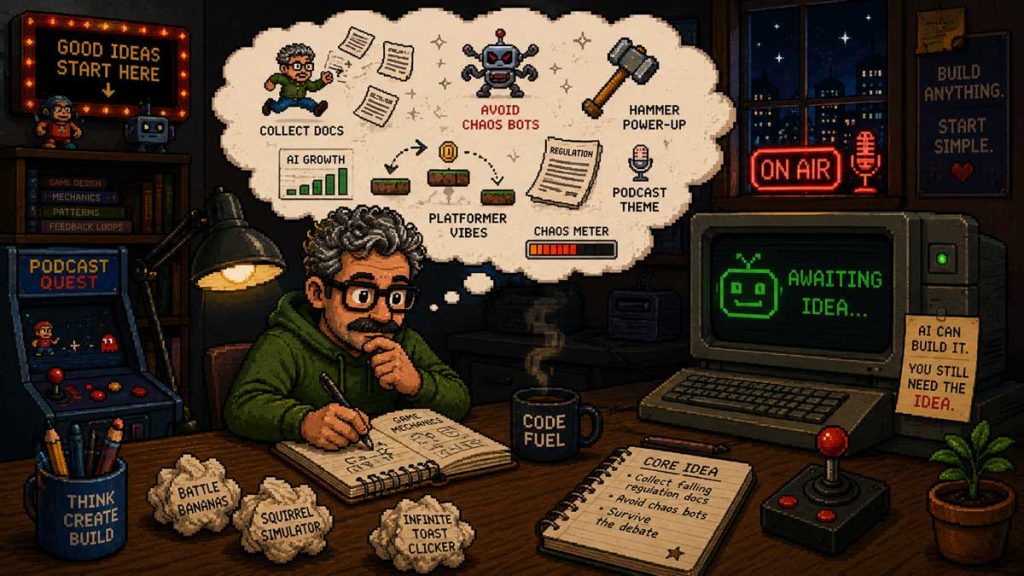
Ideas and creativity still important
AI can code your idea for you, but you still have to have that idea. In my case I came up with the core concept and all the game mechanics – at no point did AI come up with a big idea to enhance the game.
Will future AI’s get better at coming up with creative ideas? Quite possibly. But for now what’s exciting is that if you have an idea, the execution is so much more within reach for the average person.
That said, to refer back to my first point, just try it, don’t wait for a big idea. Build your own version of space invaders or pac-man, or build your own version of a simple app you use – or even just vibe-code a website.
Build anything, just to experience using an AI coding assistant.
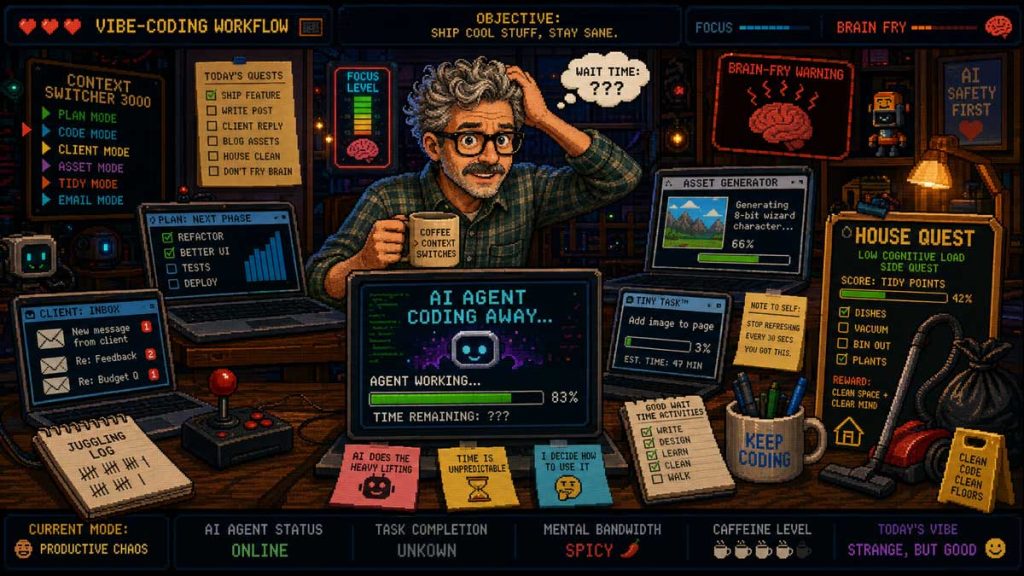
Figuring out vibe-coding workflows
This was probably the biggest experiential learning. I had read a lot about the negative impacts of vibe coding, from brain-fry to burnout. And now I understand.
Even though my little project was relatively simple, figuring out how to work on it was a weird experience, because you give the agent a task and it disappears off to do it. You don’t know how long it will take – some complex tasks get done surprisingly quickly and some easy tasks take a ridiculously long time. You have to decide what to do with this indeterminate amount of time.
At certain points of the project there were plenty of tasks I could do while the agent worked, like plan the next phase or generate images that would be needed. At these stages I could get into a flow, doing my tasks, checking on the agent, switching back and forth within the same project.
But at other points there was nothing for me to do on the project, and I had to figure out what to switch to. That switching definitely takes a toll, and I can see why people burn out managing multiple agents.
The temptation to work on my project while doing other work was strong, but it creates a huge drain on attention. I don’t know what the answer is, but I know that if I was to take on a larger vibe-coding project I’d have to figure out new workflows to protect myself from brain-fry and burnout.
One of my most productive vibe-coding sessions was done while cleaning the house, because washing up, vacuuming, and taking the bins out don’t require the same cognitive attention as, say, client work.
Switching between vibe coding and cleaning seemed fluid and non-detrimental to either task.
Not sure that’s a sustainable vibe-coding model though, there’s only so much house cleaning my little house needs.
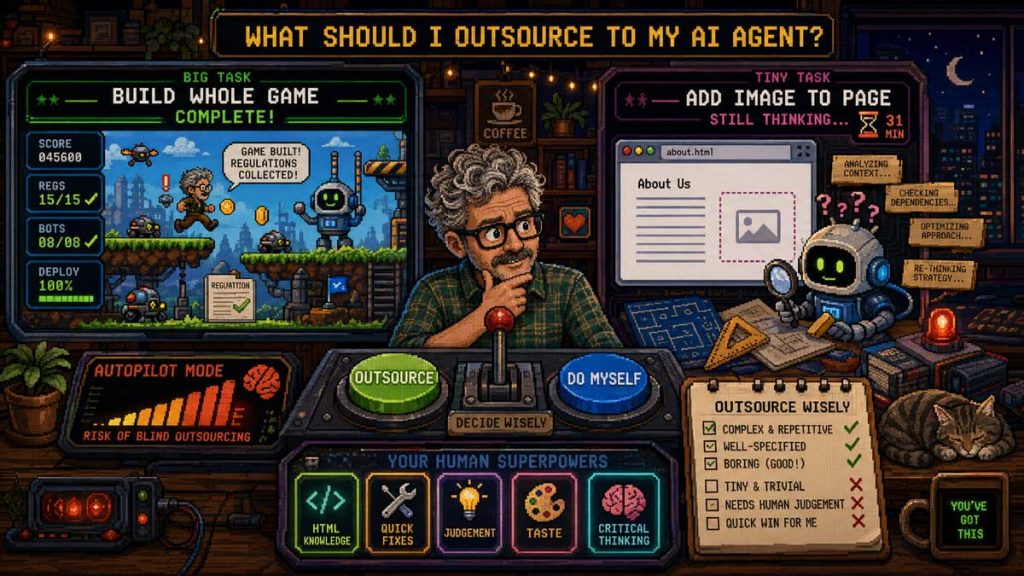
Knowing what not to outsource to Codex
The very first interaction where I vibe coded the first draft of the game was truly incredible. I brain-dumped my entire idea into Codex, told it the basics of the game mechanics, and it just went and did it in one go.
It took a while, but it came back with a complete, playable game. In the most basic form imaginable, but still, a fully functional game. There is no way I could have done anything like that, I wouldn’t have known how to start.
On the other hand, later in the project, I was building the landing page for the game and I asked Codex to add an image to the web page. It took over half an hour. I could have added that image in two minutes. Why didn’t I?
It’s quite bizarre the complex things AI can do so much faster than a human, vs the tiny things it seems to treat like a major project milestone, but what really concerns me is that I didn’t jump in.
But I was in the flow of just handing off tasks to the AI, “do this, do that, change this, edit that…”
When I use the chatbot interface, I’m careful to balance outsourcing tasks to ChatGPT with using AI to challenge my thinking and improve my skills.
Apart from the fact that I was wasting tokens on tasks I could do faster myself, if I were to do more vibe coding I’d need a better plan for what should be offloaded to agentic AI, and what skills of my own I want to nurture and defend.
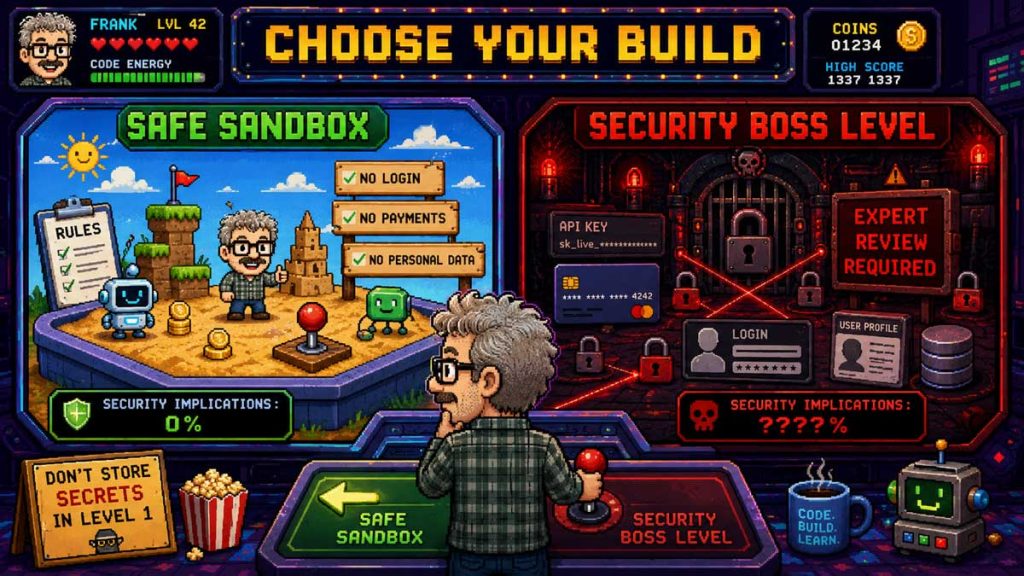
Zero security implications
I know at the start I encouraged everyone to vibe-code something, but I’ll add a caveat. If you’re not a developer, vibe-code something that doesn’t have any security implications.
Either build something entirely for your own use on your own computer, or build something fun that doesn’t need to store any kind of personal or valuable information, like my browser-based game.
I never once looked at the code for my game. I haven’t a clue how it’s written or what the code does.
Not knowing and understanding the code is fine for a simple retro computer game… not so fine for something that stores a user’s personal info or interacts with credit card details for example.
Would I ever vibe-code an app that involved my OpenAI API keys, took credit card details for payment, and stored user info?
Sure, with a lot of research into securing such a system, and probably with an expert developer assessing before go-live.
The joy of making weird things
I get that the AI world is hyper-focussed on productivity and how to use AI to make yourself more efficient and ultimately perhaps have an AI agent that does all your work for you.
We have to justify all the money that’s being poured into AI development by making it useful for the world, I get it.
But what’s totally underestimated is the creative fun you can have with AI along the way.
Admittedly, this game does have a purpose, it’s a little promotional tool for the podcast.
What the game does:
- gives me a reason to talk about The AI Argument, like this post
- contributes to the conversation around regulation and AI alignment
- links back to the podcast after you’ve played the game
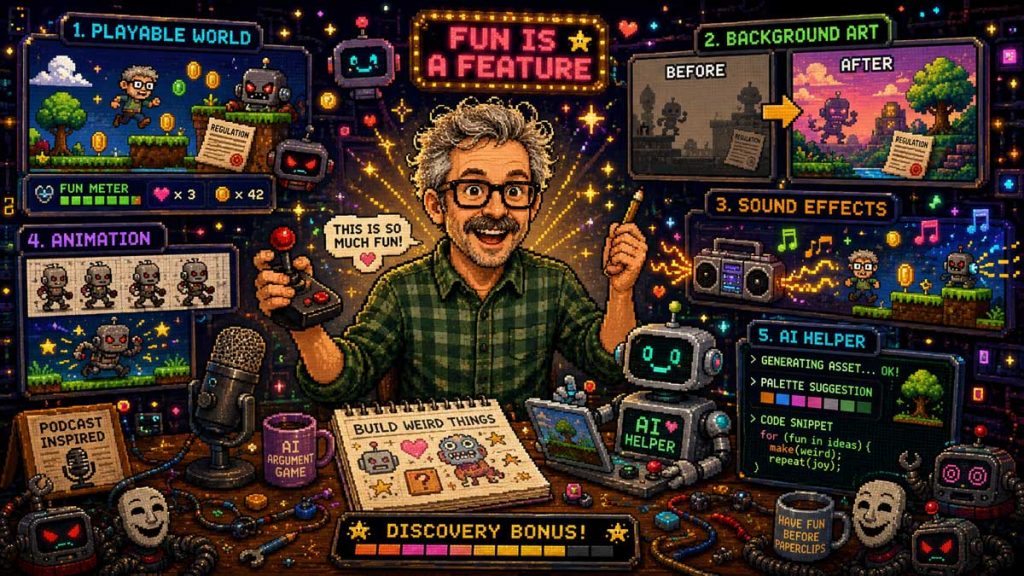
However, its real value was in the creation of it.
The exploration of the tools. The amazement when AI managed to code a basic working version of my idea in one go. How impressed I was when it managed to generate most of the arcade style images and animations when I asked it to.
There were so many other moments of pure joy along the way. Not all of them purely AI-related, just those moments of discovery as you build something.
Like adding in the background art and seeing the game jump from a concept to something that felt complete. Or experiencing for the first time the huge difference sound effects add to the experience of playing.
My motto lately has become “If you’re not having fun with AI before it turns us all into paperclips, you’re doing it wrong.“
What will you build?
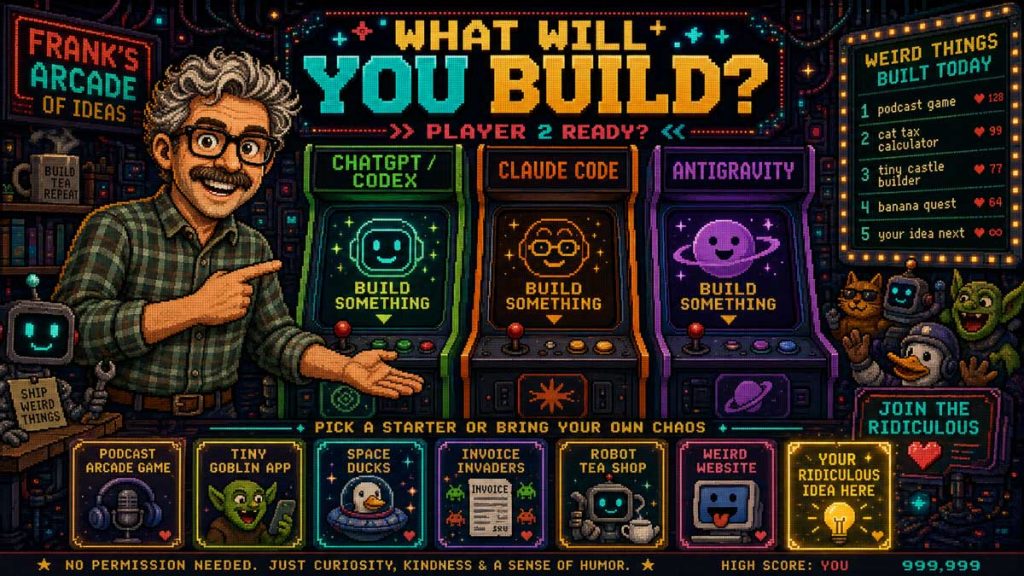
Everyone has access to a coding assistant now. I created my game using a ChatGPT Plus account, but you get limited Codex usage on ChatGPT even on a free account.
If you’re a paid Claude user you have access to Claude Code, and if you’re not using ChatGPT or Claude (do such people really exist?) you could use Google’s Antigravity coding assistant for free.
Explore any of them. Ask it to build something for you.
So go have some fun. Build something ridiculous.
You know, like a podcast-inspired retro arcade game.
And let me know what you build.